

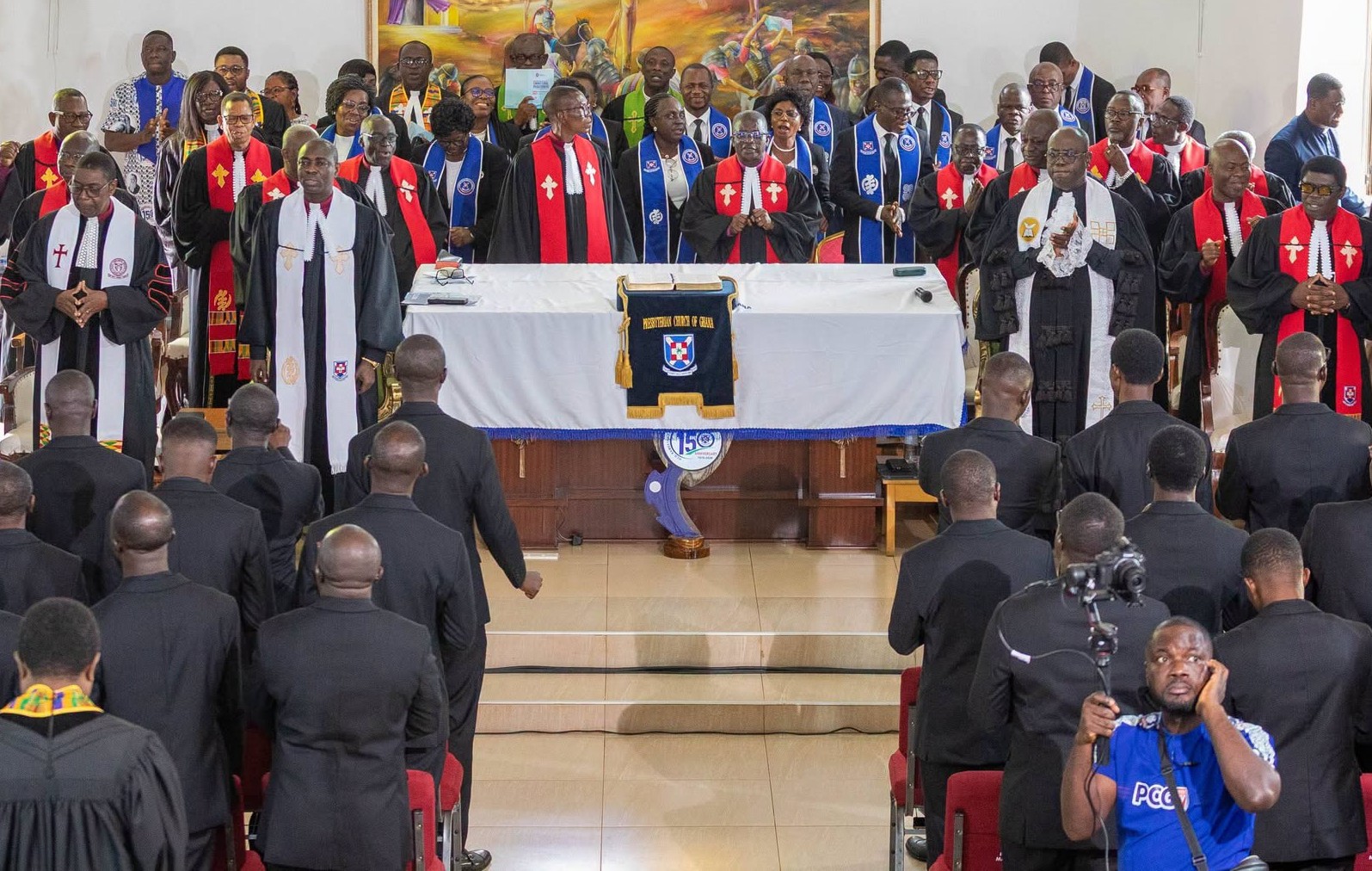

The Director of Church Life and Nurture, Rev. Andrew Shardow, says the Presbyterian Church of Ghana is formulating new protocols to guide online worship and media production across congregations.
He made the announcement on Tuesday during his department’s turn on PCG Connect at the Ramseyer Training Centre, Abetifi. Rev. Shardow explained that the rapid growth of digital worship requires clear standards to ensure excellence, consistency, and reverence in all online services.
The Department is collaborating closely with PCG TV and the Public Relations Unit of the church to develop protocols that congregations can adopt for livestreaming, media team operations, and digital content management.
He noted that while many congregations have embraced online worship, quality varies widely. “We want to make sure what we produce online is fitting for our identity as a Presbyterian Church,” he said, adding that the guidelines will help congregations maintain order, liturgical integrity, and technical excellence.
Alongside media protocols, the Department is also working to strengthen liturgical rules and tunes. Although these exist, Rev. Shardow observed that gaps appear over time as congregations adopt practices not rooted in Presbyterian tradition.
To address this, periodic engagements will be held on PCG TV, where seasoned liturgists will explain the meaning behind Presbyterian worship actions—such as carrying the Bible before worship and placing it on the communion table. These sessions aim to deepen understanding and ensure uniformity across the Church.
Rev. Shardow emphasised that the Department of Church Life and Nurture remains committed to enhancing worship and discipleship through effective teaching, preaching, and capacity building.
Despite progress, the Department faces notable challenges. One major concern is the rapid pace of technological change, which affects how the Church nurtures today’s generation, especially the youth. To respond effectively, the Department is conducting surveys to understand emerging trends and develop contemporary approaches to nurture and discipleship.
A second challenge is the growing demand for ministerial training, which is placing pressure on the church’s facilities. Rev. Shardow noted that structural reforms, upgrades, and expansions are needed to accommodate increasing numbers of trainees and to sustain high-quality formation.
By Jerome Otchere
