

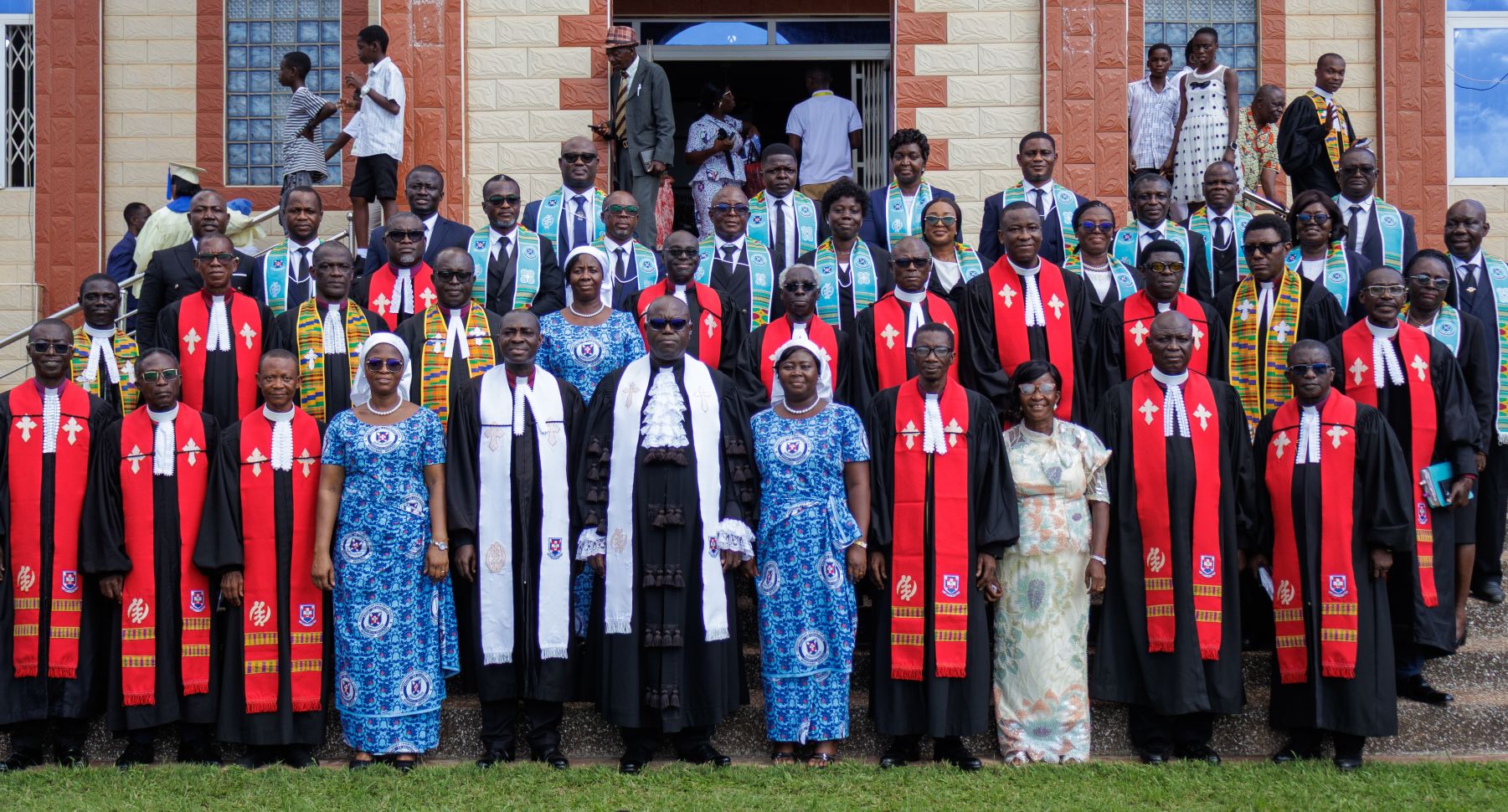

The Moderator of the General Assembly of the Presbyterian Church of Ghana (PCG), Rt. Rev. Dr. Abraham Nana Opare Kwakye, has clarified that the PCG is not an Orthodox Church, urging church members to have a proper understanding of church history and the events that shaped the Protestant Reformation.
“PCG is not an Orthodox Church,” the Moderator stressed, noting that the Presbyterian tradition is historically linked to the Protestant Reformation rather than the Eastern Orthodox tradition. He observed that many Presbyterians readily accept the description of being “orthodox” without appreciating its specific historical meaning.
Shedding light on the significance of Reformation Day as part of his sermon at the Emmanuel Congregation, Akyem Oda, during the induction service of the West Akyem Presbytery Chairperson, Rev. Charles Baah Ankrah, the Moderator traced the historical developments that led to the 16th-century Reformation, explaining that Christianity existed in several major centres long before the emergence of Protestant churches.
He cited Jerusalem, Antioch, Alexandria in Egypt, Rome and Constantinople as influential centres of the early Christian faith, each led by prominent bishops. According to the Moderator, questions over leadership and authority in the Church eventually led to divisions between the Eastern and Western branches of Christianity.
The Eastern Church aligned largely with Constantinople, while the Western Church became associated with Rome. The Moderator explained that by the 15th century, several practices within the medieval Church had generated widespread concern. He cited abuses such as simony, the buying and selling of ecclesiastical offices, and the sale of indulgences, which were promoted as certificates granting pardon for sins.
He recounted that some church leaders amassed wealth and influence contrary to the principles they professed, while indulgences were marketed in ways that suggested spiritual benefits could be purchased for both the living and the dead.
These developments, he said, provoked strong opposition from reformers, including Martin Luther. The Moderator noted that Luther and other reformers boldly challenged teachings and practices they considered contrary to Scripture, setting in motion the Protestant Reformation, which transformed the Christian Church and gave rise to traditions such as Presbyterianism.
“The church was being spoilt, but God raised men to stand up for the truth,” he said, adding that believers today must likewise remain faithful to biblical teaching and resist every form of doctrinal error.
By Jerome Otchere
