

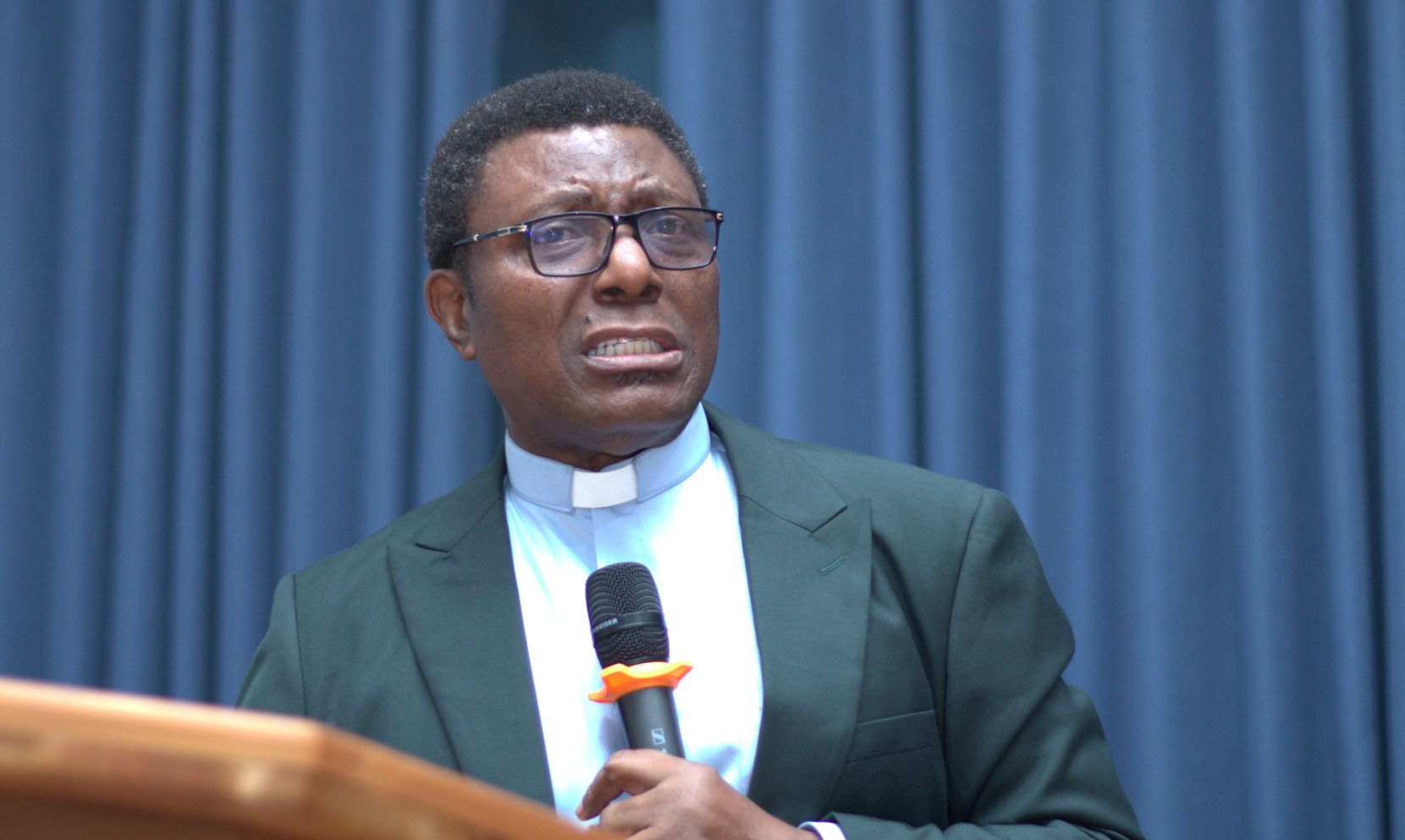

The Director of the Ramseyer Training Centre, Rev. Gideon Buernor Puplampu, has called for a renewed commitment to the foundational values that once made Presbyterian schools a national force for moral formation, academic excellence and community transformation.
He made the remarks at the 8th Annual Consultation on Education held at the Ramseyer Training Centre, Abetifi, on the theme “Building on the Foundation Already Laid: Our Mission to Transform Society.”
Speaking to heads of institutions and education leaders, Rev. Puplampu anchored his message on Matthew 5:13–16, reminding participants that the church’s educational mission was designed to make its graduates “salt and light” in society.
He noted that Presbyterian schools historically shaped individuals whose character, discipline and skills influenced families, communities and the nation at large.
Rev. Puplampu traced the origins of Presbyterian education to the Basel missionaries, describing the schools as the second arm of the church’s three‑pronged missionary strategy—gospel, education and commerce. These institutions, he said, were never intended to be mere centres of knowledge transfer but places of faith formation, moral development, skill acquisition and holistic growth.
He explained that the early Presbyterian model focused on training “the head, the heart and the hand,” producing graduates who were productive, morally grounded and committed to service. This approach created what he called the “Presbyterian cascading effect”—the transformation of one student at a time, whose character then influenced their home, community and ultimately society.
Rev. Puplampu lamented that this cascading effect has weakened over time. The church, he said, has lost not only full ownership of its schools but also the strong formation system that once distinguished Presbyterian education. “We have lost something,” he noted, “and we are fighting to retrieve and restore our honour in this matter.”
He stressed that although society has changed, the principle of transforming individuals one at a time remains valid. What must change, he argued, is the church’s approach—reviewing, revising and revamping its formation strategies to suit today’s context.
Rev. Puplampu also shared the importance of core Presbyterian values, including discipline, integrity, hard work, humility, unity and the centrality of Scripture. These values, he said, once shaped entire communities and must again become the bedrock of Presbyterian educational practice.
He warned that values do not grow by accident but through intentional cultivation. “Good Christian nurture will not happen by chance,” he said. “It requires effort, structure and deliberate investment.”
Drawing from 2 Peter 1:2–11, he urged educators to adopt a systematic approach to Christian formation—building faith, virtue, knowledge, self‑control, steadfastness, godliness, brotherly affection and ultimately love. This, he said, is the pathway to restoring the Church’s influence through its schools.
Rev. Puplampu therefore called for a renewed “secret responsibility cycle” in Presbyterian education, where each generation intentionally forms the next. He urged school leaders to become “salt and light” in their own contexts and to raise students who will do the same in the future.
By Jerome Otchere
