

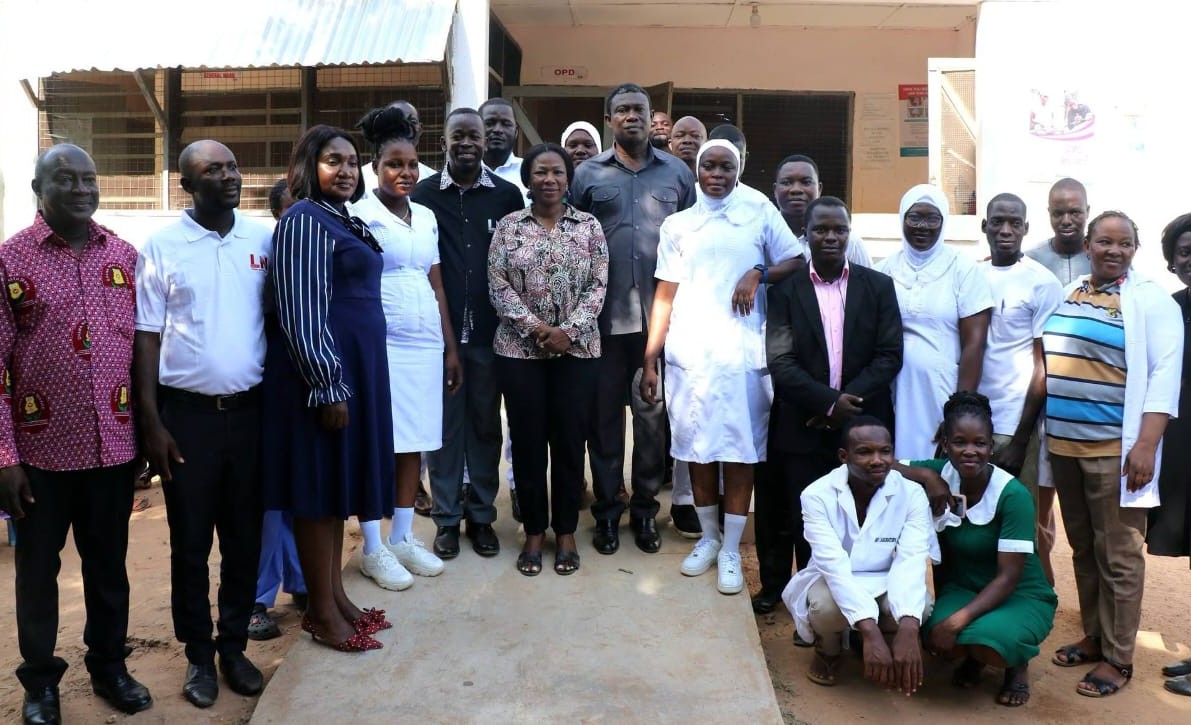

The Deputy Minister for Health, Prof. Dr. Grace Ayensu‑Danquah, has applauded the Presbyterian Health Centre at Fuoshegu in the Northern Region for its remarkable progress in improving maternal healthcare through strong community engagement, early intervention strategies, and innovative approaches aimed at reducing preventable maternal deaths.
Her commendation came during a visit to the facility as part of the Ministry of Health’s nationwide maternal mortality reduction assessment tour, an initiative designed to evaluate maternal health services, identify challenges, and document successful interventions that can be replicated across the country.
During the visit, the Deputy Minister interacted with healthcare workers, traditional authorities, development partners, and community members to understand the practical steps the facility is taking to reduce pregnancy‑related complications and improve the survival of mothers and newborns.
A major highlight of the engagement was the Centre’s targeted efforts to address anaemia among pregnant women, a leading contributor to maternal complications in Ghana. Through community education, early screening, nutritional counselling, and consistent antenatal monitoring, the facility has strengthened its ability to detect and manage anaemia before it becomes severe or life‑threatening.
Prof. Dr. Ayensu‑Danquah praised the Centre’s community‑centred model, describing it as a clear example of how collaboration between healthcare providers, traditional leaders, and local residents can yield positive results. She emphasised that reducing maternal mortality requires more than medical interventions alone. “Improving maternal health is a collective responsibility,” she said. “Health workers must be supported by communities, traditional authorities, families, and development partners to ensure that every pregnant woman receives timely and quality care.”
She also acknowledged the vital role of the Chief of Fuoshegu, Naa Gurundo Lasah, whose leadership has strengthened cooperation between the community and the health facility. With his support, more women are registering early for antenatal care, attending clinic sessions regularly, and seeking skilled delivery services—contributing significantly to early detection and management of pregnancy‑related risks.
The visit further highlighted the contribution of Lifenet International, a development partner supporting the facility through renovations, capacity‑building programmes, and the provision of essential medical equipment, including oxygen cylinders for emergency obstetric care.
The Deputy Minister expressed appreciation for the organisation’s efforts, noting that partnerships between government, faith‑based institutions, traditional authorities, and civil society remain crucial to achieving national maternal health targets.
Despite the progress made, the assessment also revealed challenges affecting the facility’s ability to deliver optimal care. Healthcare workers cited inadequate infrastructure, limited space for patient care, and the absence of a dedicated ambulance for emergency referrals as major concerns.
They also appealed for a consistent supply of essential medicines and consumables to ensure uninterrupted management of pregnancy‑related complications.
Prof. Dr. Ayensu‑Danquah assured stakeholders that the Ministry recognises the need to strengthen healthcare infrastructure, emergency transportation systems, medical supplies, and human resource capacity as part of efforts to reduce maternal deaths.
She encouraged residents to continue supporting healthcare workers by ensuring that pregnant women attend antenatal clinics regularly, deliver under skilled supervision, and seek immediate care when complications arise.
The visit reinforced the importance of community ownership, strategic partnerships, quality healthcare delivery, and timely emergency response systems in protecting the lives of mothers and babies.
As Ghana intensifies efforts to reduce preventable maternal deaths, the experience of the Fuoshegu Presbyterian Health Centre demonstrates that strong collaboration among healthcare institutions, communities, traditional leaders, and development partners can produce meaningful improvements in maternal health outcomes.
By: Rev. Immanuel Wiafe
