

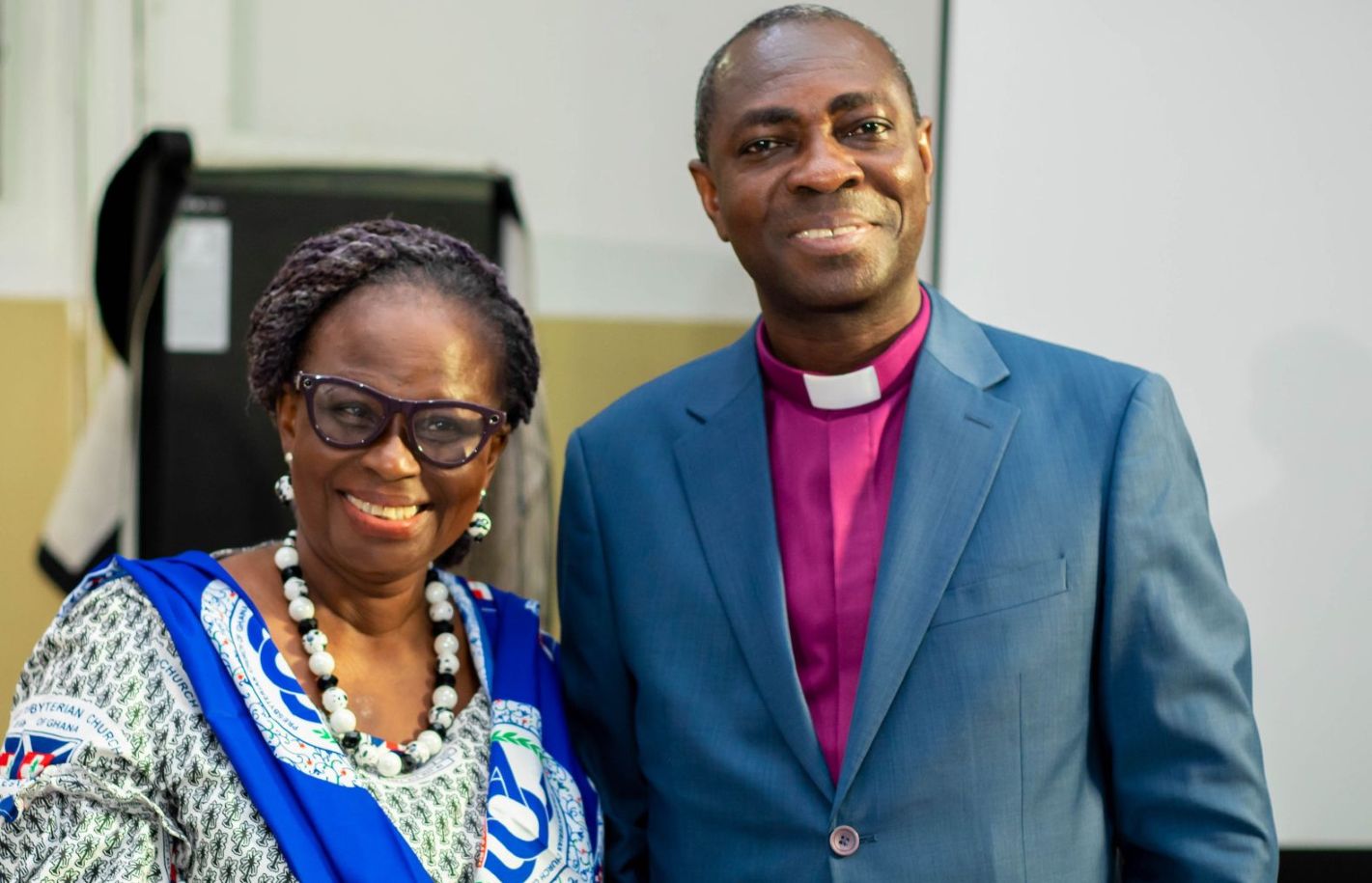

The Clerk of the General Assembly, Rev. David Aboagye‑Danquah, has affirmed that persons with disabilities are “not objects of pity” but full members of the body of Christ whose gifts are essential to the Church’s mission.
Speaking at the launch of the PCG Disability Inclusion Initiative during the National Seminar on Disability in Kumasi, he said the event was “not merely an administrative action but a spiritual declaration” of the Church’s commitment to God’s inclusive vision. He anchored his message in John 17:21— “that they may be one”—emphasising that unity must embrace all people, regardless of ability.
Rev. Aboagye‑Danquah cited Scripture to show that God is never limited by human perceptions of ability. When Moses complained of being “slow of speech,” God assured him, “I will be with your mouth and teach you what you shall speak.” He added that Jesus rejected the theology of blame when healing the man born blind, declaring that his condition existed “so that the works of God might be displayed.”
“These passages remind us that persons with disabilities are not problems to be solved,” he said. “They are bearers of gifts essential to the Church’s witness. Their participation is indispensable.”
He traced the PCG’s long history of disability inclusion, noting that Presbyterian missionaries established Ghana’s first schools for the blind and the deaf. “We opened hospitals because people fall sick; we opened schools because people need education; and we opened institutions for persons with disabilities because they are part of us,” he said.
“Though we later lost ownership of these institutions, their foundations remain Presbyterian.” Rev. Aboagye‑Danquah acknowledged contributors to the PCG Disability Policy adopted in 2019, including Rev. Dr. J. O. Y. Mante, Mrs. Gertrude Oforiwa Fefoame of the World Council of Churches, and disability advocate Mr. Maxwell Akandem.
He highlighted the historical significance of the year 2026, which marks 50 years since the PCG opened the ministry to women and 45 years since the first minister with a disability was commissioned. This year, the Church celebrates another milestone with the ordination of Rev. Seth Kwame Ativor, the first visually impaired minister in the PCG.
“He did not ask the Church to lower its standards,” Rev. Aboagye‑Danquah said. “He met them—and his commissioning is a testimony to God’s grace.”
He urged the Church to confront physical, social and attitudinal barriers that exclude persons with disabilities. “Historically, disability was viewed negatively, and people were treated as incapable of living full lives,” he said. “Today, we must reject that mindset. Persons with disabilities are citizens with capacities, gifts and rights.”
Rev. Aboagye‑Danquah ended with a call for a shift from charity to empowerment. “Instead of seeing persons with disabilities as passive recipients of care, we must assist people to help themselves so they can participate fully in the Church, in education, in the workplace and in society.”
By Jerome Otchere
