

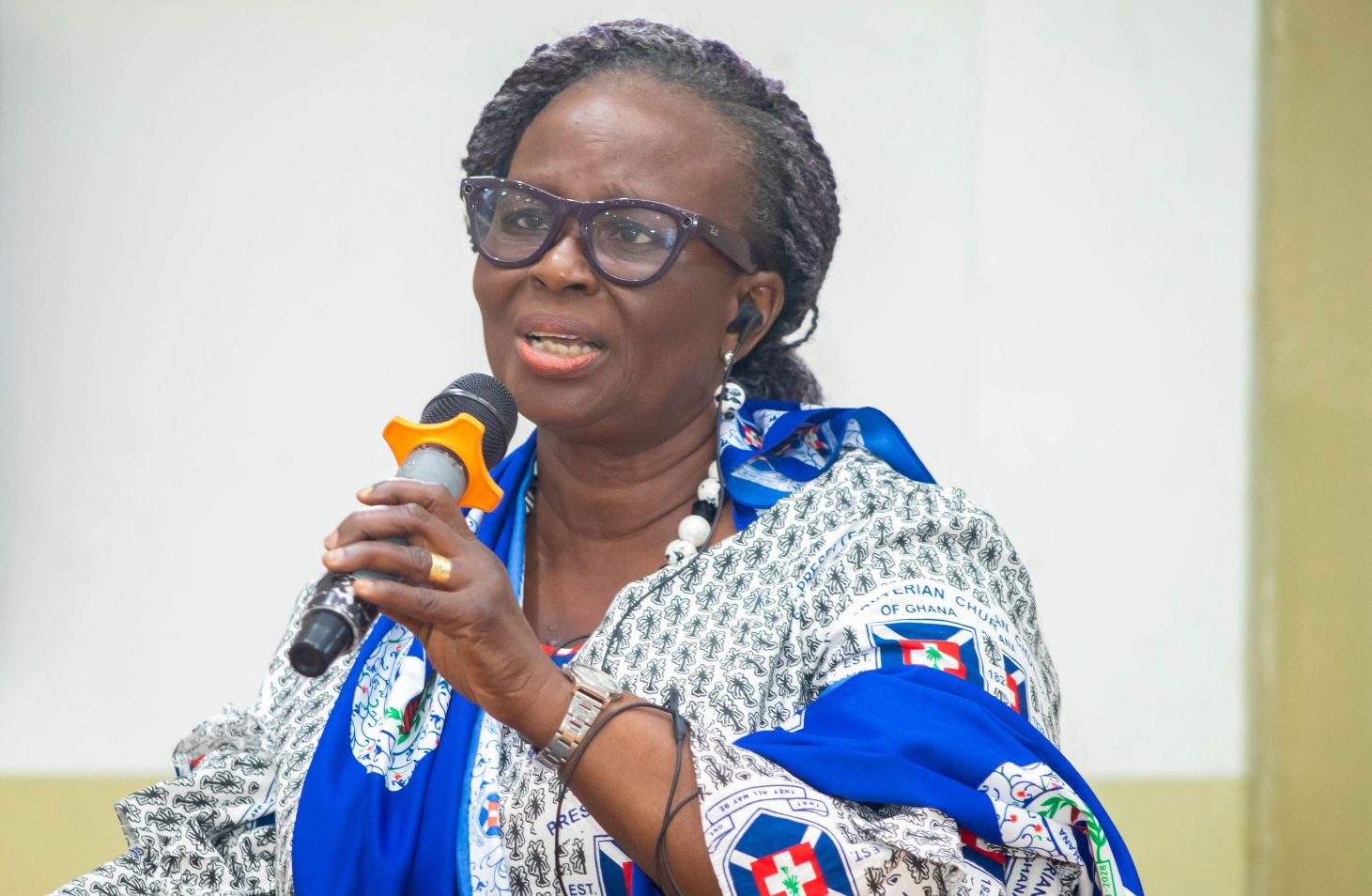

UN Expert on Disability Issues and Global Advocacy Manager at Sightsavers, Gertrude Oforiwa Fefoame, says the Presbyterian Church of Ghana (PCG) has reached “a major milestone” in a disability‑inclusion journey that began more than ten years ago.
Speaking at the publicity launch of the PCG Disability Inclusion Initiative, Fefoame, who also serves as focal person on the church’s National Committee on Disability, stressed that while Ghana has made progress, significant gaps remain.
These gaps, she explained, were evident through local advocacy and through her work with the Ecumenical Disability Advocates Network of the World Council of Churches. Such experiences strengthened the push for disability inclusion within the PCG, leading to the drafting and adoption of the church’s Disability Policy in 2019.
She said the policy aligns with the church’s vision to be a Christ‑centred, sustaining and growing institution, and requires disability inclusion to be embedded in all policies, programmes and activities. Its provisions cover accessibility across church facilities, training at all levels, counselling for families, advocacy and empowerment, representation of persons with disabilities in church structures, and the establishment of disability committees throughout the church.
Fefoame highlighted progress already made under the Department of Church Life and Nurture, including the formation of the National Committee on Disability and the appointment of its chairperson. The committee has prepared programmes for the International Day of Persons with Disabilities for 2025, with plans already submitted for 2026 and 2027.
It has also produced awareness materials, accessible information sheets and orientation sessions for presbytery committee members. She noted that training workshops across presbyteries have introduced inclusive worship practices, strengthening the Church’s understanding of disability inclusion. The national seminar brought together representatives from across the PCG to study the Disability Policy, observe demonstrations, engage in action planning and outline next steps.
These include establishing disability committees at all levels, collecting disability‑related data, organising technical discussions, instituting annual disability celebrations and advocating for employment policies that ensure representation of persons with disabilities in decision‑making bodies.
Fefoame acknowledged challenges such as slow formation of committees, financial constraints and the need for accessibility audits. She called for intentional budgeting and stronger commitment from all levels of the Church, warning against treating disability inclusion as optional. “Our goal is clear: no one must be left behind,” she said.
She emphasised that the moment was the result of years of prayer, advocacy and dialogue within the Church. She urged congregations to examine who is absent from their worship spaces and to remove physical, social and spiritual barriers that keep persons with disabilities away. “It is our duty to walk with them, sit with them, advocate for accessible entrances, and challenge attitudes that exclude,” she added.
By Jerome Otchere
